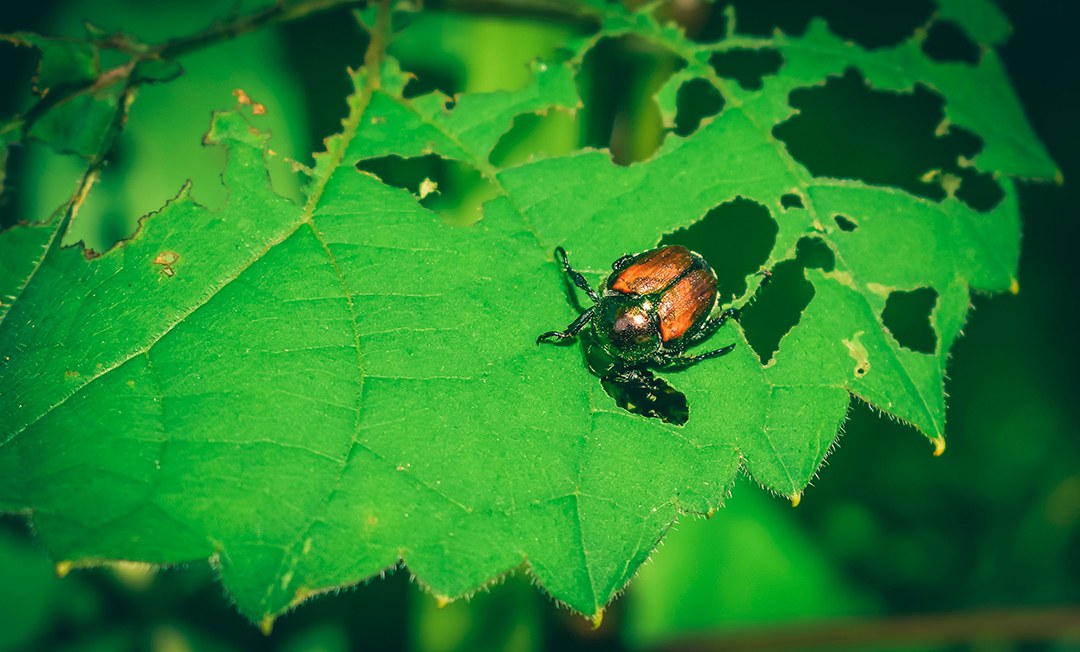
Japanese Beetles and the Damage They Cause
Japanese beetles are one of the most destructive insect pests found in landscapes and gardens. Although the adult beetles are attractive with their metallic green heads and copper-colored wings, they can cause significant damage to trees, shrubs, flowers, fruits, and turfgrass.
Adult Japanese beetles typically emerge from the soil in mid to late June and early July, depending on weather conditions and location. Once they emerge, they immediately begin feeding on plant foliage. They consume the soft tissue between leaf veins, creating a skeletonized appearance that can quickly ruin the look and health of ornamental plants. Tree and shrub damage is most noticeable during July and August when beetle populations reach their peak. Heavy infestations can leave plants nearly defoliated, reducing their ability to produce food through photosynthesis. Repeated defoliation weakens plants, making them more susceptible to drought, disease, and other environmental stresses.
Japanese beetles feed on more than 300 plant species. Some of their favorite targets include roses, crape myrtles, lindens, birch trees, grapevines, hibiscus, and many fruit-bearing plants. The beetles often feed in large groups, causing extensive damage in a short period of time.
After feeding and mating, female beetles return to the soil to lay eggs, usually during July and August. Each female can lay dozens of eggs in moist turfgrass areas. Within a few weeks, the eggs hatch into larvae, commonly known as grubs, which begin feeding on grass roots beneath the soil surface.
Large grub populations can weaken lawns, causing brown patches, thinning turf, and areas that pull up easily like a loose carpet. Lawn damage typically becomes noticeable in late summer and early fall as grubs actively feed on roots. Damaged lawns may also attract skunks, raccoons, and other animals searching for grubs as a food source. Grubs remain in the soil through winter and resume feeding in spring before pupating and emerging as adult beetles.
Showcase LawnWorks is alert for beetles and grubs on properties serviced. Monitoring plants during the summer months is important for early detection. Hand-picking beetles, using targeted treatments, and maintaining healthy plants can help reduce damage. For lawns, preventive grub control treatments can significantly reduce future beetle populations by targeting the immature stage before they emerge as adults.
A healthy landscape starts with proactive pest management. By identifying Japanese beetles early and taking appropriate action, homeowners can protect their plants, preserve the beauty of their property, and prevent long-term damage to their landscape investment.
Showcase LawnWorks enjoys helping customers in towns surrounding Lancaster, Denver, New Holland, Leola, Smoketown, Adamstown, Churchtown, Gap, Kinzers, Paradise, Reading and beyond.
Learn more about our services by visiting our website now. You can contact us online using our online form or give us a call at 717-354-3226.
For more informative articles regarding lawn care, tree and shrub care, landscaping, and pest control follow our blogs. And don’t forget to check us out and like us on Facebook.